AI in Health: Chatbot Alarms, EU Act Deadline, and a Drug Discovery Alliance
From chatbot dependency warnings to EU Act deadlines, five AI-in-health stories making waves this week.
By Dr. Asher Knippel
The week of June 26, 2026 brought a cluster of consequential headlines at the intersection of artificial intelligence and medicine — from a landmark psychologist survey sounding alarms about AI chatbots in mental health care, to a regulatory deadline looming over European hospitals, to a bold pivot by an image-generation company into whole-body ultrasound.
Psychologists Sound the Alarm on AI Mental-Health Chatbots
A new survey from the American Psychological Association is drawing urgent attention to the rapid and largely unregulated use of AI chatbots as mental-health support tools. Polling more than 1,200 licensed psychologists, the APA found that 77% have at least one patient who uses an AI chatbot for emotional support or therapy-adjacent guidance — a figure that reflects a sweeping shift in how Americans, especially young people, are seeking help.
The numbers grow more concerning from there. More than five million people aged 12 to 21 are reportedly turning to AI for mental health advice, and 36% of psychologists say they have observed patients developing genuine dependency on these tools. Most strikingly, 97% of the surveyed psychologists believe that AI chatbots could reinforce delusions or harmful behaviors in vulnerable users.
Researchers at Johns Hopkins and APA leadership are now calling on policymakers to establish clear protective standards. The core concern is not that AI has no role in mental health — it may help expand access in underserved areas — but that the current pace of adoption is outrunning the safety frameworks needed to make that role responsible.
EU AI Act Deadline Approaches, and Most Hospitals Are Not Ready
Europe's landmark AI Act moves into its next enforcement phase on August 2, 2026, when provisions covering high-risk healthcare applications become fully enforceable. The timing exposes a significant preparedness gap: a Frontiers Digital Health study finds that only 26% of European hospitals feel ready for the new requirements.
That shortfall exists against a backdrop of rapid AI adoption. The World Health Organization's Regional Office for Europe reports that 74% of EU member states now use AI-assisted diagnostics, and 63% have deployed clinical chatbots in some capacity. All 27 EU states have identified AI diagnostics as a national priority — yet the regulatory readiness to deploy those systems responsibly lags well behind.
Members of the European Parliament have added a cautionary note, warning against using AI as a simple staffing substitute rather than a genuine clinical aid. Europe faces a documented healthcare worker shortage, and the temptation to fill those gaps with AI tools is real. MEPs argue that without careful governance, hospitals risk deploying systems that amplify existing inequities rather than correcting them. For health systems operating in Europe, August 2 is no longer a distant regulatory horizon.
Midjourney Bets on Whole-Body Ultrasound — Without FDA Clearance
In a pivot that surprised industry watchers, AI image-generation company Midjourney unveiled "Midjourney Medical," an initiative to build whole-body ultrasound scanners capable of producing 3D body maps in roughly 60 seconds. The device would use an array of 358,000 sensors to generate what the company envisions as a detailed snapshot of a person's internal anatomy.
The project is being co-developed with Butterfly Network under a partnership signed in November 2025, with $15 million in upfront funding. Midjourney plans to open its first "Midjourney Medical Spas" — consumer-facing scan centers — by late 2027.
There is a significant caveat. The scanner is currently classified as investigational and has not received FDA clearance for diagnostic use. That distinction matters: patients receiving a scan would not be getting a clinically validated diagnostic result in any regulatory sense. As Forbes analysis notes, the company's real bet may be less on replacing radiologists than on building a vast proprietary dataset of body scans — a dataset that could, in turn, train future diagnostic AI. Whether regulators and consumers will embrace that framing remains an open question.
FDA Gives Aidoc a Second Breakthrough Designation for AI Radiology
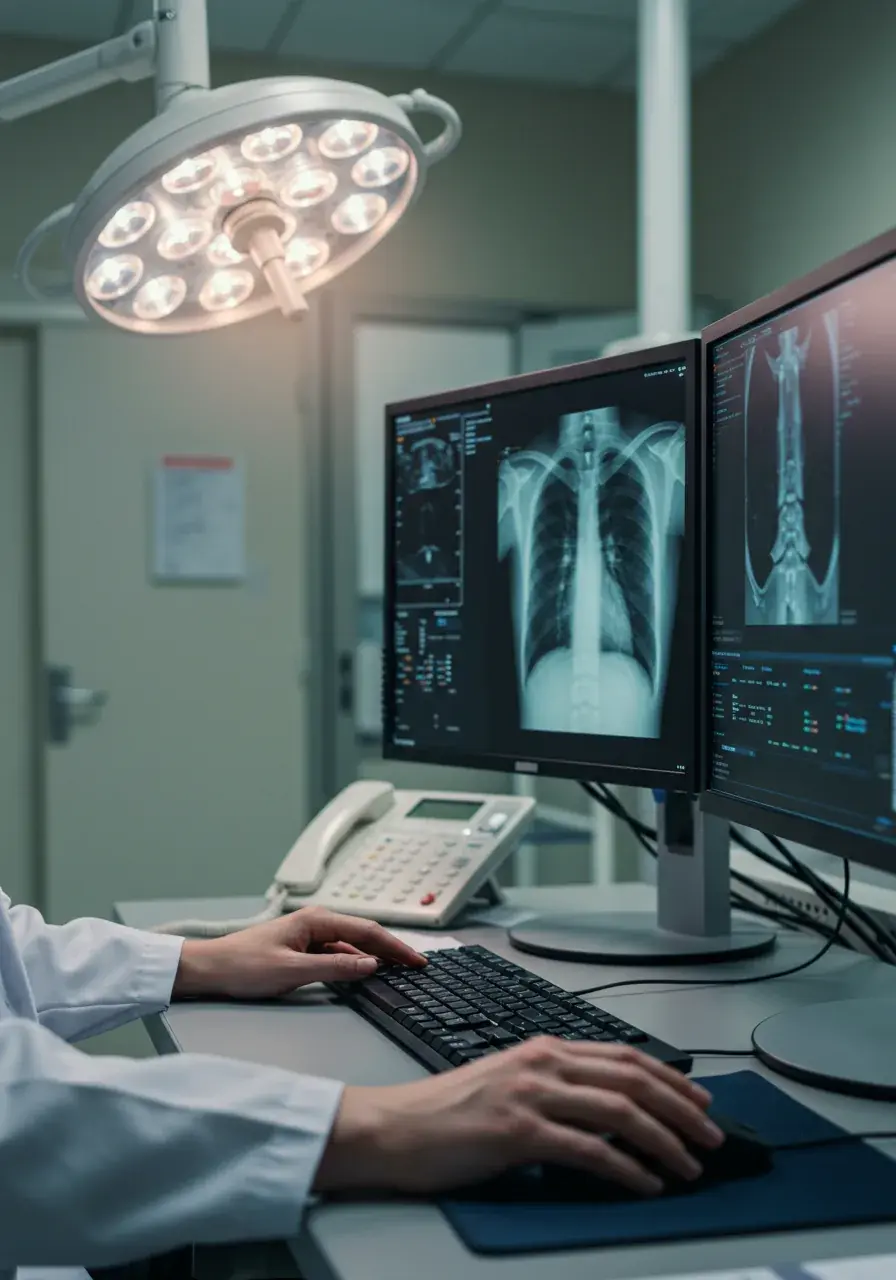
The FDA has granted Breakthrough Device Designation to "First Read," an AI tool developed by Aidoc that analyzes chest X-rays and generates preliminary radiology report text. It marks Aidoc's second such designation in under a year, signaling continued regulatory confidence in the company's approach.
The need the tool addresses is quantifiable. Outpatient imaging turnaround times have more than doubled since 2014, a gap driven in large part by a shortage of radiologists relative to the volume of studies being ordered. An AI that can draft a preliminary chest X-ray report does not replace the radiologist, but it can meaningfully accelerate the workflow — allowing physicians to review, correct, and finalize reports faster than starting from a blank slate.
Breakthrough Device Designation does not grant market clearance, but it does open a pathway for faster FDA review and closer collaboration with the agency during development. For health systems evaluating AI-assisted radiology solutions, the designation is a meaningful signal of where the regulatory winds are blowing.
SK Biopharmaceuticals and Insilico Medicine Team Up on AI Drug Discovery
At the BIO 2026 International Convention in San Diego, South Korea's SK Biopharmaceuticals and Insilico Medicine formalized a joint research agreement aimed at identifying new therapeutic targets and developing small-molecule drug candidates using AI. The partnership, announced during the June 22–25 conference, represents SK Biopharmaceuticals' most explicit commitment yet to an AI-first development strategy.
Insilico Medicine brings a documented track record in generative AI for drug design, having advanced multiple AI-designed molecules into clinical trials in recent years. Drug target discovery has historically been one of the slowest and most expensive stages of pharmaceutical development; AI platforms that can surface actionable targets and model how small molecules might engage them promise to compress timelines that once spanned many years.
Whether those promises translate into approved drugs at scale remains an open question, but partnerships like this one are multiplying across the industry. BIO 2026 made clear that AI has moved from a peripheral experiment to a central pillar of pharma strategy — and that the race to build the most capable drug-discovery platform is now fully underway.