A Superbug in 23 States, an Empty Blood Bank, and a Patch for Better Sleep
Candida auris hits 23 states, the Red Cross calls its second-ever blood crisis, and a wearable patch rewires REM sleep.
By BINA Editorial
Three stories competed for attention in this week's health cycle: a hospital-acquired fungal superbug quietly spreading state by state, a blood supply so low the Red Cross reached for a rarely used emergency declaration, and a university lab's wearable device that coaxes sleeping brains into deeper, longer REM. Tucked behind those headlines, a Nature Cell Biology paper reveals a surprising new weakness in one of the most dangerous leukemias — one that could change how clinicians think about treatment design.
A Drug-Resistant Fungus Has Reached 23 States
Candida auris doesn't follow the rules most fungal infections obey. It spreads between patients, survives on hospital surfaces for weeks, and is frequently resistant to the antifungal drugs physicians have relied on for decades. The CDC now reports more than 3,000 clinical cases logged so far in 2026, spread across at least 23 states — with Texas (706 cases), Michigan (503), and Illinois (366) leading the count.
The number sounds alarming, but one crucial caveat applies to almost every case: C. auris very rarely infects healthy people. The population at risk is narrow but genuinely vulnerable — patients on ventilators, people with central venous lines, residents of long-term acute-care hospitals and skilled nursing facilities. In those settings, mortality from invasive infection can exceed 30 percent.
What concerns epidemiologists isn't this summer's tally in isolation. It's the pattern. C. auris has moved from exotic rarity to ambient hospital hazard in under a decade, and no new antifungal drug classes are close to market. The annual growth rate has slowed since 2022, which is modestly reassuring — but the CDC continues to recommend strict contact precautions and rigorous environmental decontamination as the primary lines of defense, because no pharmaceutical solution is waiting in the wings.
The Red Cross Has Only Done This Once Before
The American Red Cross has issued a national blood supply crisis declaration exactly twice in its history. The first was during the COVID-19 pandemic. The second came last week.
Donations fell to a four-year summer low as extreme heat, poor air quality, and a wave of foodborne illness kept regular donors home. With hospital demand rising during the summer trauma season, the gap between supply and need widened fast. By July 27, the Red Cross — which supplies roughly 40 percent of the nation's blood — reported having less than a one-day national supply of type O positive blood, the most commonly transfused type.
The organization has begun rationing distributions of type O, directing hospitals to reserve it for life-threatening emergencies while the rest of the supply catches up. The response has been direct: the Red Cross calculates that just three additional donors per blood drive, on average, would be enough to end the crisis and stabilize supplies. To attract those donors, the organization is offering incentives including movie tickets and gift cards.
Healthy adults who are at least 17 years old and weigh more than 110 pounds can donate whole blood approximately every 56 days. Donation appointments can be found at redcrossblood.org.
A Patch That Puts You Into REM Sleep
A new wearable device developed at the University of Texas at Austin reaches deep into the sleeping brain — without surgery, without medication, and by all participant accounts without significant discomfort.
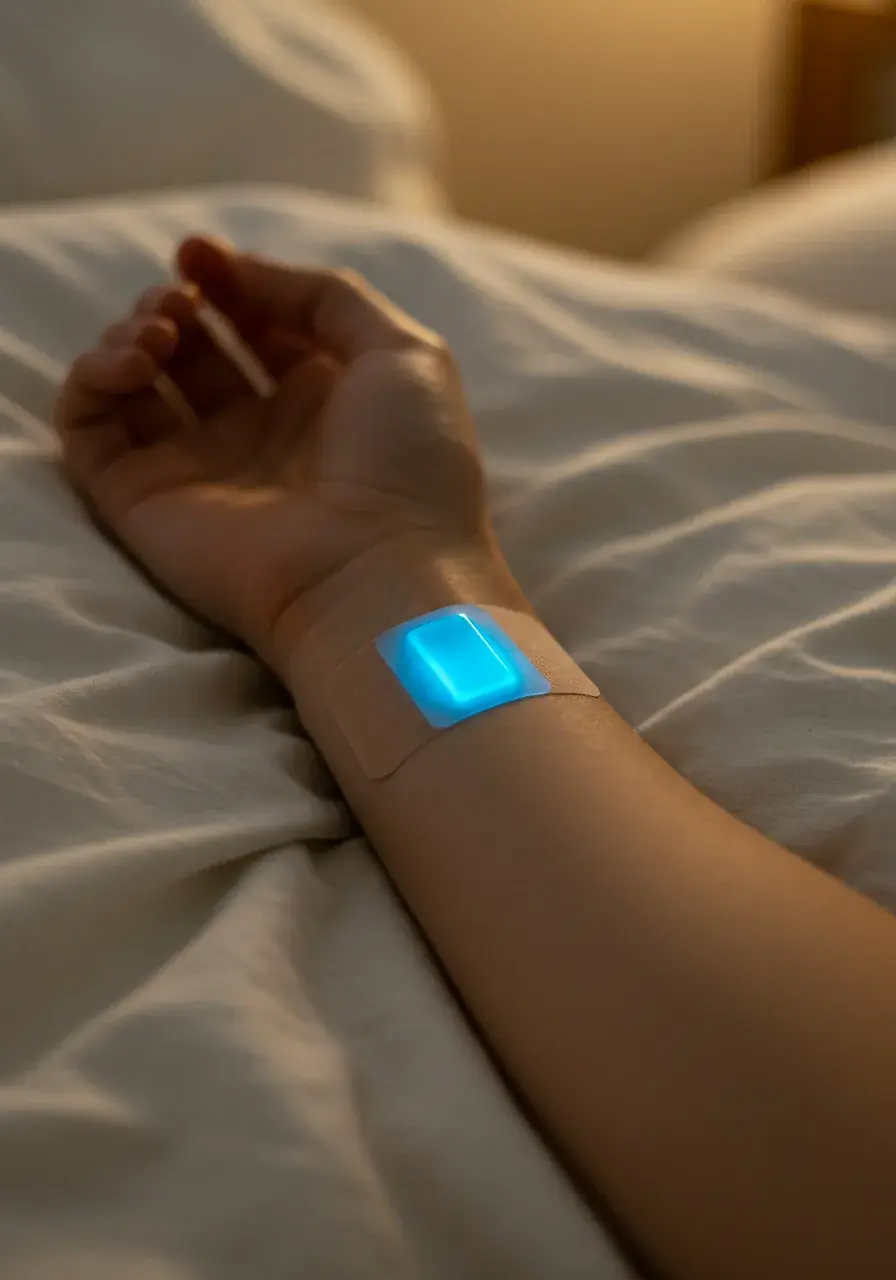
The NEUSLeeP patch adheres to the skin and combines two technologies: focused ultrasound stimulation that can reach subcortical brain structures, and electrodes that read brain-wave activity in real time. The system detects when a sleeping person is approaching the right neurological conditions for REM and delivers precisely timed acoustic pulses to help the transition along.
In a study of 28 participants published in Nature Communications, the patch shortened the time to reach REM sleep by an average of 43 minutes and extended the REM period by about 16 minutes. Both healthy sleepers and participants with pre-existing sleep difficulties showed the effect. Researchers also observed changes in circuits linked to stress regulation and emotion processing — preliminary signs that the technology could do more than improve simple sleep efficiency.
The team plans larger trials targeting people with PTSD, depression, and chronic insomnia, where disrupted REM sleep is both a symptom and a known contributor to the condition. No commercial timeline has been announced, but the published results have attracted attention from sleep-medicine researchers looking for non-pharmacological options.
Leukemia's Hidden Weakness: Ferroptosis
Researchers at Baylor College of Medicine may have found a new way to make existing leukemia drugs more effective — by paying close attention to how cancer cells die, not just how they stop dividing.
FLT3 mutations are among the most common genetic drivers of acute myeloid leukemia (AML), and drugs that inhibit the FLT3 enzyme have become central to treatment protocols for the subset of patients who carry those mutations. A paper published this week in Nature Cell Biology reveals that these inhibitors do more than trigger the cancer cell's standard self-destruct pathway, known as apoptosis. They also induce ferroptosis — a form of cell death driven by uncontrolled oxidation of cellular lipids — by disabling a protective protein called GPX4.
The practical implication is double-edged. Ferroptosis is a vulnerability that might be deliberately amplified to make FLT3 inhibitors more potent. But the paper also flags a risk that is directly actionable for patients today: high vitamin E intake — common among supplement users — appears to suppress ferroptosis and may quietly reduce drug effectiveness. The authors call for clinical studies to examine whether dietary patterns are compromising treatment outcomes in AML patients who are currently on FLT3 inhibitor regimens.
AML remains one of the deadliest blood cancers, with a five-year survival rate below 30 percent for most patients. Discoveries that clarify how existing drugs actually work, even at the mechanistic level, create real options for improving the ones already in use.