Ebola Second-Largest on Record; Jalapeño Alert in 27 States; Narcolepsy Gets a First-in-Class Fix
Ebola's 2026 surge reaches a grim record; a salmonella alert spans 27 U.S. states; a first-in-class oral narcolepsy drug reaches patients.
By Dr. Asher Knippel
Today's roundup covers a worsening infectious-disease emergency in central Africa, a food-safety alert that has reached two dozen U.S. states, and a cluster of clinical and research developments — including the first oral drug to treat narcolepsy type 1 at its root cause.
Wednesday, 12 August: Ebola's 2026 Outbreak Becomes the Second-Largest in History
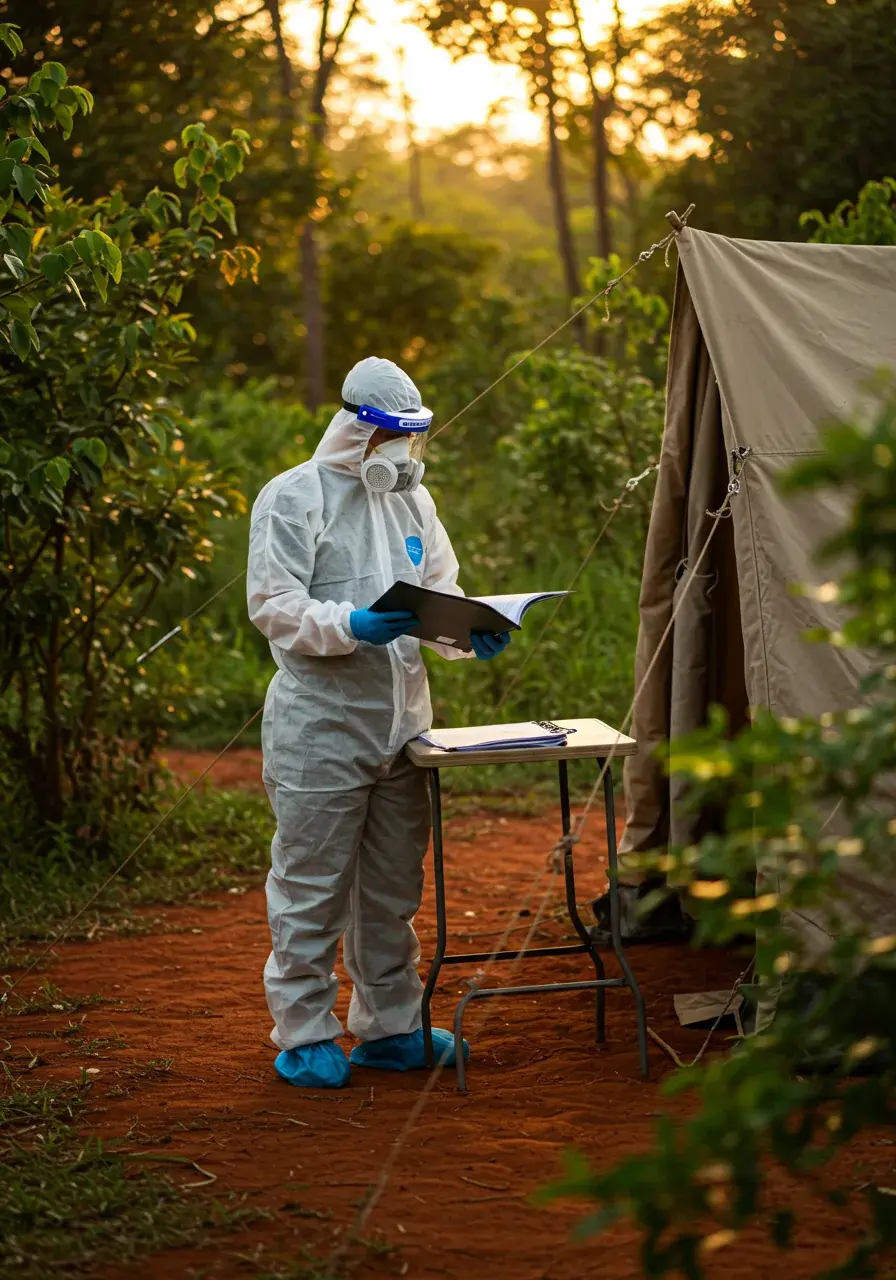
The Bundibugyo-strain Ebola outbreak spreading through the Democratic Republic of the Congo and into Uganda has crossed a grim statistical threshold: cumulative deaths have surpassed 2,000, making this the second-largest Ebola event in recorded history, behind only the 2014–2016 West African epidemic.
WHO's Regional Office for Africa reported 172 new confirmed cases and 95 deaths in the seven days ending 9 August, with 704 patients currently in isolation wards across five affected provinces — Ituri, North Kivu, South Kivu, Haut-Uele, and Tshopo. Fifty-three of 140 health zones have now recorded at least one case. The outbreak is expanding faster than any previous Ebola event at a comparable stage, according to WHO situation reports.
Two imported cases have been confirmed in Europe since May — one in Germany, one in France — both in travellers medically evacuated from active zones. The European Centre for Disease Prevention and Control rates the risk to EU residents, including those in Cyprus, as very low: Ebola requires direct contact with body fluids from a symptomatic person and is not airborne. Travellers to affected areas should consult WHO advisories and comply with any health screening on return.
Wednesday, 12 August: Scientists Map the Brain Circuit Behind Deep Brain Stimulation in Parkinson's
Researchers have identified, for the first time, the specific brain network — and its characteristic electrical rhythm — that appears to drive the therapeutic benefit of deep brain stimulation (DBS) in people with Parkinson's disease. The findings, reported 12 August, explain why DBS helps some patients dramatically and offer a map for optimising electrode placement in future implants.
DBS delivers precisely timed electrical pulses to deep structures in the brain. Clinicians have known the therapy works without fully understanding why. Pinpointing the responsible circuit and its oscillatory fingerprint opens the door to personalised stimulation protocols tuned to each patient's individual network — a step toward making an already-effective intervention more consistent. Parkinson's disease affects an estimated 10 million people worldwide; approximately 50,000 DBS devices are implanted each year.
Saturday, 8 August: Jalapeño Recall Spreads to 27 States as Salmonella Sickens 345
The U.S. Centers for Disease Control and Prevention and the Food and Drug Administration are investigating a multistate outbreak of Salmonella Javiana infections traced to fresh jalapeño peppers from Sinaloa, Mexico, distributed by Coast Citrus Distributors. As of the latest update, 345 people are ill across 27 states and 36 have been hospitalised.
Taylor Fresh Foods recalled the affected jalapeños on 8 August. Products bearing "Best If Used By" dates up to 16 August were distributed to retailers including Kroger, Target, Walmart, Trader Joe's, and Whole Foods in more than 20 states. The USDA's Food Safety and Inspection Service issued a separate public health alert for ready-to-eat meat and poultry products manufactured with the recalled peppers. Restaurant chains including Chipotle and QDOBA have pulled affected stock from service.
If you purchased fresh jalapeños recently from any of these retailers, check the "Best If Used By" date and discard if in doubt. Salmonella causes fever, diarrhoea, and cramping typically lasting four to seven days; older adults, young children, and immunocompromised individuals face the highest risk of severe complications.
Tuesday, 5 August: FDA Approves First Oral Orexin Agonist for Narcolepsy Type 1
The U.S. Food and Drug Administration approved Orzeyful (oveporexton), manufactured by Takeda, on 5 August 2026 — making it the first oral orexin receptor 2 (OX2R) agonist to reach the market and the first drug approved to treat narcolepsy type 1 (NT1) as a complete disorder.
Narcolepsy type 1 is caused by near-total loss of orexin-producing neurons in the hypothalamus. Existing treatments manage symptoms indirectly — stimulants for sleepiness, sodium oxybate for cataplexy — but none replenishes the missing signal. Oveporexton selectively activates OX2R, the receptor through which orexin normally promotes wakefulness, directly addressing the underlying deficit. Approval rests on two parallel, randomised, double-blind, placebo-controlled phase-3 trials (FirstLight and RadiantLight), which showed significant reductions in excessive daytime sleepiness and cataplexy attacks, according to the American Academy of Sleep Medicine.
Approximately 200,000 Americans live with narcolepsy type 1, a condition that typically goes undiagnosed for seven to ten years. Orzeyful is expected to reach pharmacies once DEA scheduling is finalised.
Monday, 10 August: Lifting Weights 90–120 Minutes Per Week Linked to 13% Lower Risk of Early Death
A large observational study published in mid-August found that adults who engaged in muscle-strengthening exercise for 90 to 120 minutes per week had a 13% lower risk of dying early compared with those who performed none, with particularly striking reductions in deaths attributed to cardiovascular and neurological disease.
The finding adds to a growing body of evidence — previously focused on aerobic activity — that resistance training independently and significantly protects longevity. Notably, the benefit appeared to plateau around the 90–120-minute weekly threshold; additional hours of lifting did not produce proportionally larger gains. As with all observational studies, this one cannot establish causation: people who lift regularly may share other habits that drive the result. Still, the effect size is consistent with what has been observed for aerobic exercise in comparable designs.
The WHO already recommends at least two days per week of muscle-strengthening activity for all adults. For most people, two 45-to-60-minute sessions per week sits comfortably within the benefit range identified here.
Sunday, 9 August: Receptor Mapping Explains Why H5N1 Bird Flu Infects Dairy Cattle Through the Udder
Scientists have established the molecular reason H5N1 avian influenza preferentially infects dairy cattle through mammary tissue rather than the respiratory tract: the cell-surface receptors the virus uses to gain entry are concentrated in udder tissue, not in the lungs, in cattle.
This tissue-receptor mapping result — early-stage basic science — helps explain a cluster of observations documented since H5N1 began spreading through U.S. dairy herds in 2024: why infected cattle shed live virus in milk rather than nasal secretions, why pasteurisation remains the critical barrier to human exposure through the food supply, and why the highest human risk falls on farmworkers with direct, unprotected contact with raw milk. The finding does not alter current public-health guidance but sharpens the mechanistic understanding of how this strain behaves in mammals — important context for ongoing surveillance, antiviral design, and vaccine development.
This article is a journalistic summary of recent health and medical developments and does not constitute medical advice. Readers with health concerns, or those considering any change to their treatment or medications, should consult a qualified clinician.