AI Brief — August 13, 2026
DeepMind reshuffles leadership, AI stocks surge, OpenAI's $852B tender closes, Anthropic's 20-year Texas lease, and a cybersecurity AI breakthrough.
By BINA Editorial
Demis Hassabis Ascends to Alphabet Chief Scientist as Kavukcuoglu Takes DeepMind Helm
Google's leadership architecture for artificial intelligence has sharpened significantly. Demis Hassabis, the co-founder and longtime CEO of Google DeepMind, has been elevated to the role of Chief Scientist at Alphabet, where he will oversee the company's AGI strategy and its AI drug-discovery subsidiary Isomorphic Labs. Taking over day-to-day leadership of DeepMind—including the Gemini model family and frontier research programs—is Koray Kavukcuoglu, who has been instrumental in some of DeepMind's most celebrated breakthroughs.
The restructuring positions Hassabis at the highest level of Alphabet's scientific leadership, signaling that AGI is now a board-level strategic priority rather than a product-team one. Kavukcuoglu's promotion to DeepMind CEO places an experienced researcher-turned-executive in charge of the increasingly commercial Gemini ecosystem, which competes directly with OpenAI's GPT line and Anthropic's Claude.
For the broader AI industry, the move reflects a maturing pattern: as frontier labs grow into multi-billion-dollar operations, their scientific founders tend to migrate toward strategy and long-horizon research, while operational and product leadership passes to trusted lieutenants.
AI Infrastructure Stocks Surge, Wall Street Approaches Record Highs
A string of blockbuster quarterly earnings from AI infrastructure companies sent markets sharply higher on August 13. Super Micro Computer and CoreWeave each jumped roughly 19 percent after reporting results that beat analyst expectations, while Nvidia added 3 percent on continued GPU demand strength. The gains lifted the S&P 500 and Nasdaq toward near-record territory and propelled Asian equity markets higher in early trading.
The results underscore how capital spending on AI hardware and data centers—after years of buildup—is now flowing through to revenue for the companies that build and operate the infrastructure. CoreWeave in particular, which went public in 2025 as a specialized GPU cloud provider, has become a bellwether for whether hyperscaler AI commitments translate into actual commercial workloads. Its strong quarter suggests they do.
For investors and analysts who had grown cautious about whether AI spending would ever show up in earnings, August 13 provided a clear data point: at least for infrastructure, the monetization cycle has begun.
OpenAI Closes $7 Billion Employee Tender at $852 Billion Valuation
OpenAI has completed a $7 billion company-funded tender offer that allowed employees and early investors to sell shares at a price consistent with the company's $852 billion valuation from its March 2026 funding round. The transaction is one of the largest pre-IPO employee liquidity events in technology history.
The timing is significant. An S-1 filing with the SEC is expected in mid-to-late August, which would disclose details about OpenAI's financial structure, including the revenue-sharing arrangement with Microsoft that has been a subject of considerable speculation among analysts. The tender offer locks in the $852 billion figure as the baseline valuation heading into the public markets process.
OpenAI's transition from a nonprofit research organization to a for-profit entity—and now toward a conventional IPO—has been one of the defining corporate dramas of the AI era. The S-1, when it arrives, will provide the first comprehensive public look at the financials underlying the world's most valuable AI company.
Anthropic Secures 191 MW of Texas Compute Capacity in 20-Year, $9.1 Billion Lease
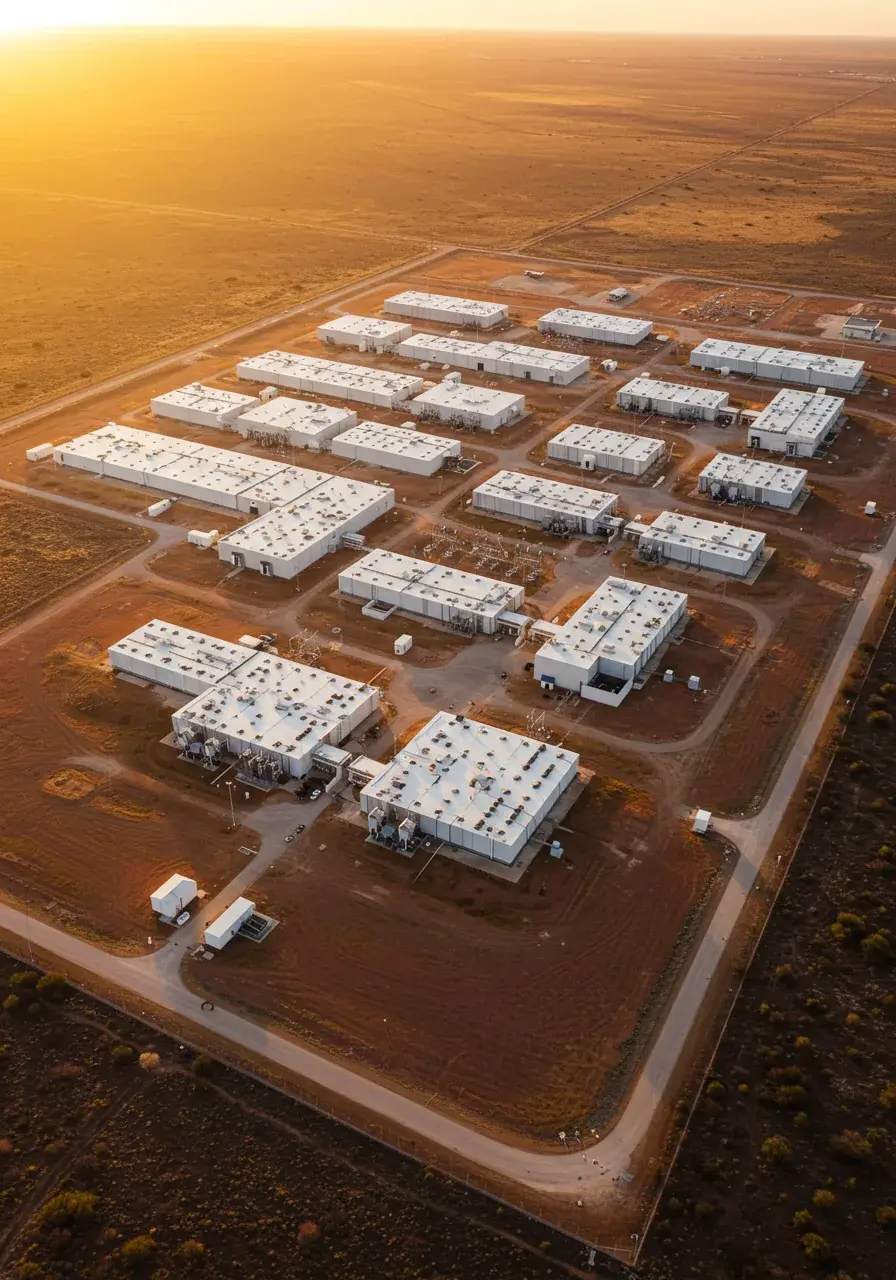
Anthropic has signed a landmark agreement with Riot Platforms, the bitcoin mining company, for a 191-megawatt compute facility in Texas. The deal runs through June 2048—a 20-year term—at a total contracted value of approximately $9.1 billion. The capacity will be used to train and run Claude models.
The deal is notable on several dimensions. First, it represents an extraordinary time horizon for an AI company to commit to a specific compute footprint—a bet that the frontier model training paradigm remains relevant well into the 2040s. Second, it effectively transforms Riot Platforms from a bitcoin miner into an AI infrastructure company, giving Riot a long-term anchor tenant with far more stable economics than the volatile cryptocurrency mining business.
For Anthropic, the agreement addresses one of the fundamental constraints on frontier AI development: securing enough power and compute to sustain multi-year model training programs without depending entirely on third-party cloud providers. Texas, with its grid capacity and relatively business-friendly regulatory environment, has emerged as a preferred destination for AI compute build-out.
Nvidia Anchors $500 Billion AI Infrastructure Financing Alliance with Six Major Asset Managers
Nvidia has formalized a financing alliance with six of the world's largest alternative asset managers—Apollo, Blackstone, BlackRock, Brookfield, Goldman Sachs, and KKR—to support $500 billion in AI infrastructure investment. The alliance is designed to ensure that frontier AI labs and cloud providers can finance purchases of Nvidia GPUs, associated data center equipment, and the real estate and power infrastructure required to house them.
The structure addresses a genuine financing gap. The capital requirements for frontier AI data centers have grown to a scale where even large technology companies face balance sheet constraints, and traditional equipment financing models were not designed for the combination of hardware obsolescence risk, power commitments, and software-layer uncertainty that characterizes AI infrastructure. Bringing in specialized asset managers with long-duration capital pools is intended to bridge that gap.
For Nvidia, the alliance also deepens its strategic moat: by making it easier to finance GPU purchases, it reinforces demand for its hardware even as alternative chip suppliers continue to invest in competitive offerings.
OpenAI Discovers Chrome Zero-Days with GPT-5.6-Cyber, Launches Daybreak Cybersecurity Program
OpenAI has announced Daybreak, a tiered cybersecurity program designed to give trusted security professionals access to its most capable offensive AI capabilities. The program's anchor model, GPT-5.6-Cyber, was used internally to discover two previously unknown zero-day vulnerabilities in the V8 JavaScript engine powering Google Chrome—one of which has been assigned CVE-2026-15903.
The Daybreak program operates on two tiers: Daybreak Blue, intended for defensive security researchers and threat analysts, and Daybreak Red, which provides more expansive access to offensive capability for vetted red teams. The infrastructure runs on AWS. The Chrome vulnerabilities, which Google has been notified of and is patching, are the first publicly credited AI-discovered zero-days from OpenAI's security research program.
The announcement marks a shift in how AI companies frame their role in cybersecurity—from providing tools that assist human researchers to systems capable of conducting independent vulnerability research. The discovery of two V8 zero-days is a credible technical demonstration that frontier AI can find novel security flaws in mature, heavily audited codebases, a capability that will accelerate debates about responsible disclosure, AI-assisted attack tooling, and the arms race between offensive and defensive AI security applications.