Moonshot Accused, EU Deadline Slips, and OpenAI's Georgia Bet
The US accused Moonshot AI of copying Anthropic's model, the EU delayed its high-risk AI deadline, and OpenAI broke ground on a $30B data center.
By BINA Editorial
Three threads from the past 48 hours will shape AI policy and infrastructure for years: a direct US government accusation of Chinese intellectual-property theft, a European regulatory reprieve for businesses still racing to comply, and the largest single infrastructure commitment in OpenAI's history.
White House Accuses Moonshot AI of Distilling Anthropic's Fable Model
On July 22, Michael Kratsios, director of the White House Office of Science and Technology Policy, publicly accused Beijing-based Moonshot AI of conducting "large-scale, covert industrial distillation" of Anthropic's Fable 5 model to build its Kimi K3 system — the first time a senior US official has directly named a specific Chinese laboratory for intellectual-property theft in AI. Kratsios also alleged that Moonshot obtained Nvidia's GB300-equipped servers through intermediaries in Thailand, a potential violation of US export controls that ban the sale of advanced AI chips to Chinese entities. Treasury Secretary Scott Bessent escalated the confrontation hours later: "Open source is not open season on American IP," he posted, warning that "sanctions and Entity List designations will be on the table" for companies engaged in large-scale distillation of American AI models. Moonshot AI has not responded publicly; some independent researchers question whether the timeline — Fable 5 was only made publicly available on July 1 — is consistent with the scale of distillation alleged.
EU AI Act's High-Risk Rules Pushed to December 2027
The European Union will not enforce its most demanding AI Act obligations on August 2 as originally scheduled. The Digital AI Omnibus — a simplification package endorsed by the European Parliament in June and subsequently adopted by the Council — delays high-risk AI system requirements under Annex III from August 2, 2026 to December 2, 2027, and embedded systems under Annex I to August 2028. The delayed rules cover AI systems used in hiring, credit scoring, law enforcement, healthcare, and education — precisely the applications with the most direct impact on ordinary people's lives. Two things remain unchanged: the Omnibus takes effect only once published in the EU's Official Journal (expected before August 2 but not yet done), and the transparency obligations that also take effect August 2 — requiring disclosure when interacting with an AI system and machine-readable watermarks on AI-generated content — are not delayed and proceed on their original schedule.
DeepSeek Retires Its Legacy API as V4 Becomes the Standard
Today, July 24, marks end-of-life for DeepSeek's legacy deepseek-chat and deepseek-reasoner API endpoints, formalizing DeepSeek V4 as the company's production standard. V4-Pro is a 1.6-trillion-parameter mixture-of-experts model with 49 billion active parameters, a one-million-token context window, and an 80.6% score on SWE-bench Verified — matching Gemini 3.1 Pro at the top of the open-weights leaderboard. At $0.87 per million output tokens, V4-Pro sits well below the pricing that characterized frontier AI a year ago, reinforcing the ongoing downward pressure on inference costs that has made production AI deployment accessible to a far wider range of organisations.
OpenAI Launches Enterprise Agents and a $30 Billion Georgia Campus
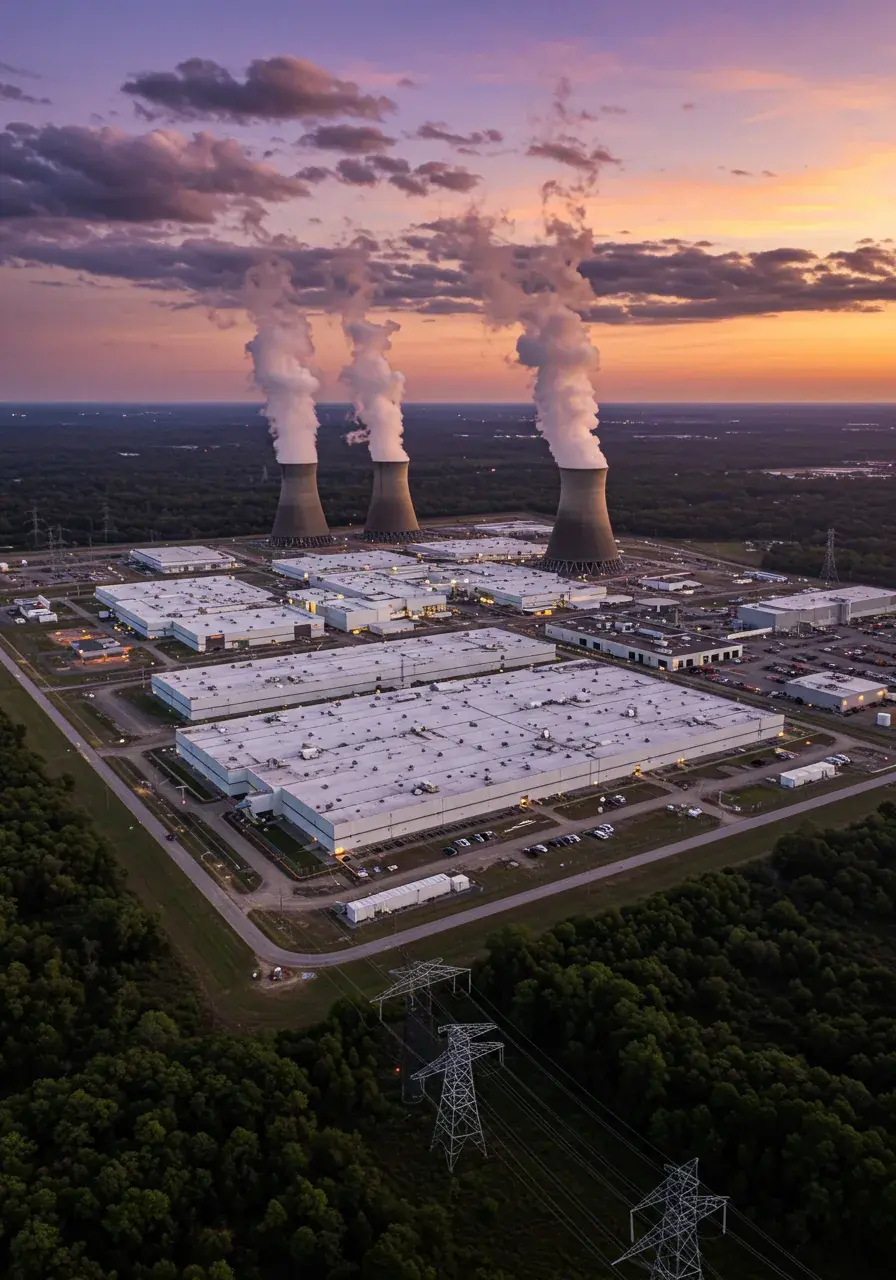
OpenAI made two significant announcements on July 22. The first is Presence, an enterprise agent platform connecting AI agents to internal company systems — providing shared context, permissions, guardrails, and actions across voice and chat channels; BBVA, SoftBank, and IAG are among its first customers in limited general availability. The second is Project Camellia: a 3.2-gigawatt AI data center campus on 1,400 acres in Effingham County, Georgia, with reported spending exceeding $30 billion and phased power delivery from Georgia Power beginning in 2028. Together, the announcements mark a strategic shift: OpenAI is positioning itself as a vertically integrated AI cloud provider — controlling infrastructure, platform, and model — rather than simply a model API vendor.
AI Labs Are Becoming Major Washington Lobbyists
Federal lobbying disclosures covering the second quarter of 2026 show a sharp acceleration in AI-industry spending in Washington. Anthropic spent $1.97 million in Q2 — a 26% increase quarter-on-quarter — now outspending Nvidia on federal lobbying and nearly matching Oracle's $2 million. OpenAI spent $1.2 million, up 18% from Q1. The figures reflect a deliberate strategic shift: as AI legislation moves through state and federal bodies and the EU AI Act's enforcement architecture becomes a template others may follow, the labs that build frontier models are investing heavily in shaping the rules that govern them. For the communities AI policy is meant to protect — workers navigating automated hiring tools, patients interacting with healthcare AI, citizens subject to algorithmic decisions — the scale of that lobbying presence is a relevant fact when assessing whose interests receive the most attention in the conversations ahead.