Kimi K3, Xi's AI Pledge, and TSMC's Record Quarter
China's Moonshot AI releases the world's largest open model, Xi headlines global AI governance, and chip profits hit a new peak.
By BINA Editorial
The day's most consequential AI news arrives from three directions: a Chinese startup has released the largest open-weights model ever built, the world's most-watched AI conference opened with a call for global cooperation, and the semiconductor foundry behind nearly every advanced AI chip posted its most profitable quarter on record.
Moonshot AI Releases Kimi K3, a 2.8-Trillion-Parameter Open Model
Beijing-based Moonshot AI has unveiled Kimi K3, a sparse mixture-of-experts model with 2.8 trillion total parameters — the largest set of open weights in the history of large language models. In practice, the model activates roughly 40 billion parameters at a time, a design that allows it to match or exceed the performance of proprietary frontier systems including Anthropic's Fable 5 and OpenAI's GPT-5.6 on standard benchmarks, according to Moonshot's published evaluations.
The company has announced that full model weights will be made publicly available by 27 July. If the release proceeds on schedule, it would mark the first time a model at this scale has been distributed without licensing restrictions — a meaningful shift in who can deploy, study, and build on the most capable AI systems. Researchers, universities, and smaller organisations would, in principle, gain access to capabilities that until now required contracts with major cloud providers.
Xi Jinping Opens World AI Conference, Calls for Global Cooperation
Chinese President Xi Jinping delivered the opening keynote at the 2026 World Artificial Intelligence Conference in Shanghai — his first direct address to the annual event — framing AI as a shared global resource rather than a competitive instrument. Speaking to delegates from more than 80 countries, he characterised AI development as "a symphony requiring every nation's instrument" and called for a multilateral framework to prevent a small group of countries from controlling the most powerful AI systems.
Xi announced 5,000 AI training scholarships for students and researchers from lower-income countries. The conference simultaneously served as a High-Level Meeting on Global AI Governance, co-organised with UN bodies, giving the commitments an institutional weight beyond typical state diplomacy. The Shanghai summit arrives after the EU AI Act's core provisions took effect and amid continuing US export controls on advanced chips — positioning China as a proponent of open multilateral governance in a contested geopolitical landscape.
Apple Intelligence Clears Chinese Regulation, Powered by Alibaba and Baidu
China's Cyberspace Administration has granted regulatory clearance for Apple Intelligence, the on-device and cloud AI suite Apple launched in Western markets in late 2025. Under the approved terms, Apple will not deploy its own language models in mainland China; instead, Alibaba — whose Qwen model family holds a significant share of the Chinese enterprise market — and Baidu will supply the underlying AI for Chinese iPhone users.
The arrangement illustrates a pattern becoming standard for foreign technology companies in China: local AI partners satisfy data localisation and model-provenance requirements, while the international brand provides the interface. Siri and iOS AI features will function on Chinese devices, but will draw on different underlying models than their counterparts in Europe or the United States.
Microsoft's Largest-Ever Patch Tuesday Credits AI with Finding the Flaws
Microsoft released patches for 570 security vulnerabilities in its July Patch Tuesday update — the largest single-month total in the company's history. Microsoft attributed a meaningful share of the discovery and triage work to internal AI systems, which it said surfaced and prioritised vulnerabilities at a pace beyond what human security teams working alone could achieve.
Of the 570 CVEs addressed, several were rated critical, covering the Windows kernel, Office, and Azure services. Security researchers noted that while AI-assisted triage is now standard in large vendors' workflows, this disclosure is unusually specific about AI's role in a single release cycle. Organisations running Windows infrastructure should prioritise this update.
TSMC Posts $22 Billion Quarterly Profit as AI Chip Revenue Jumps 77%
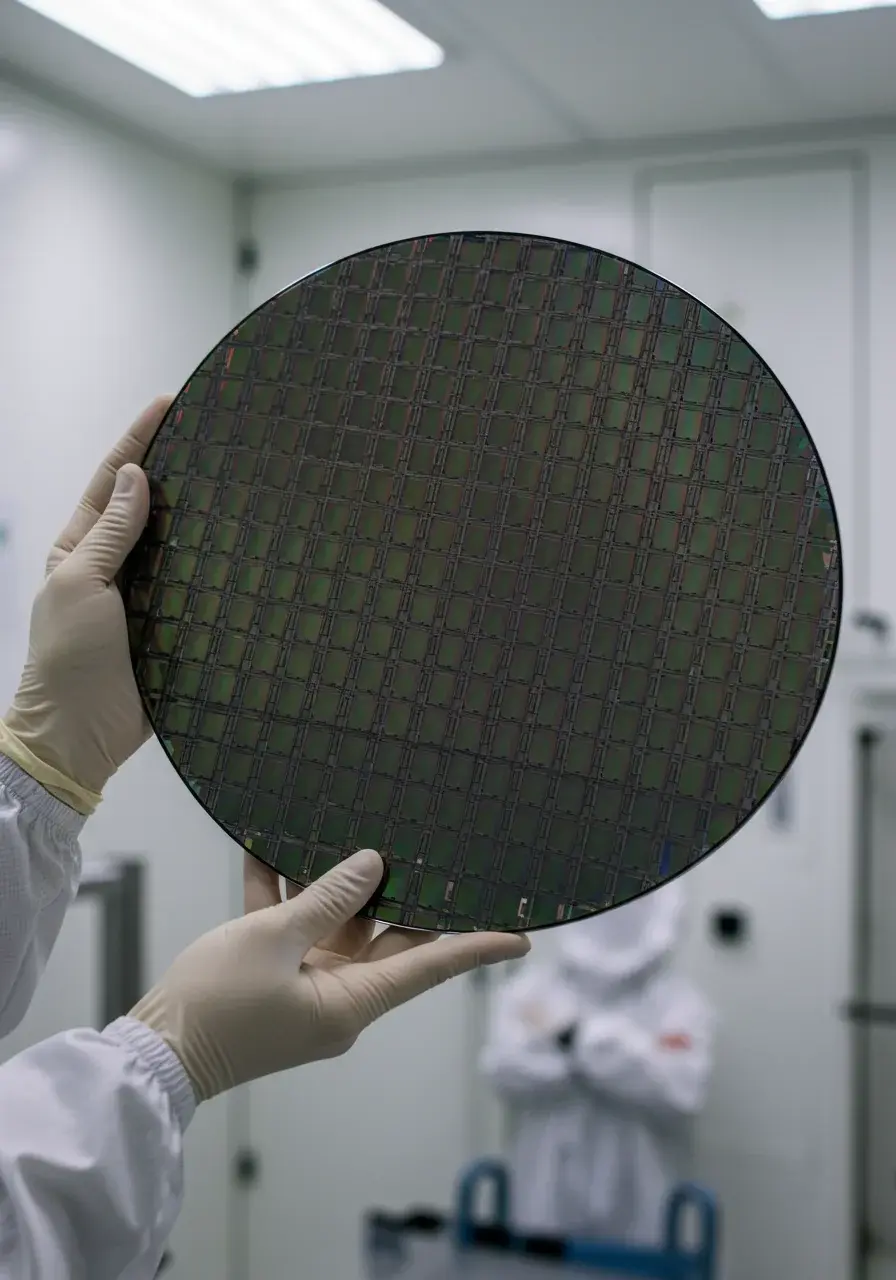
Taiwan Semiconductor Manufacturing Company reported second-quarter net profit of $22 billion on revenue of $40.2 billion — both records for the foundry, and both substantially ahead of analyst expectations. The 77% year-on-year profit increase was driven almost entirely by demand for advanced-node chips destined for AI training and inference: GPUs, custom accelerators, and the high-bandwidth memory stacks that accompany them.
TSMC raised its 2026 capital expenditure guidance to $60–64 billion and reaffirmed a $265 billion commitment to its US manufacturing expansion in Arizona. The results provide a concrete data point in an otherwise forward-looking industry: the AI infrastructure build-out described in financial projections for several years is now generating returns that show up clearly in one of the world's most capital-efficient companies.